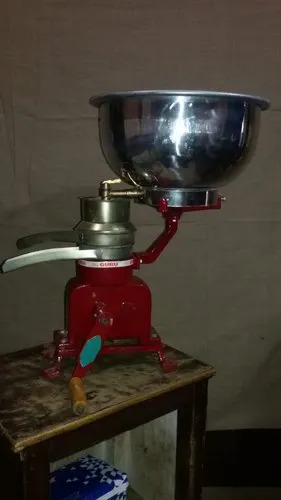
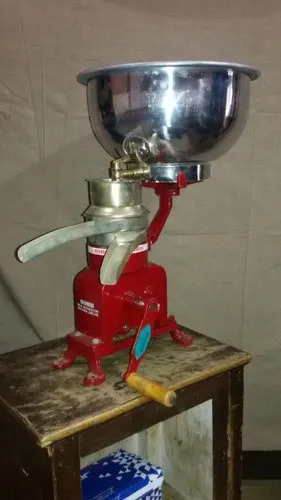
About 100 lph Hand Operated Cream Separator
| Machine Capacity |
100 LPH |
| Production Capacity |
100 LPH |
| Equipment Type |
Milk Pasteurizer |
| Tank Capacity |
15 L |
| Country of Origin |
Made in India |
| Operation Type |
Hand Operated |
| Automation Grade |
Semi Automatic |
Efficient Cream SeparationAchieve up to 100 litres per hour of milk processing with this hand-operated cream separator. The high disc count improves fat extraction, delivering a robust 1:10 cream to skimmed milk ratio suitable for farms and small dairies.
Designed for Durability and SafetyConstructed from food-grade stainless steel and aluminium with a powder-coated iron base, this separator resists corrosion and ensures safe milk handling. All components in contact with milk are non-toxic and easy to clean manually.
User-Friendly Manual OperationNo electricity required-simply operate the manual crank handle for smooth cream separation. The ergonomic design minimizes effort, making the separator accessible for daily use in varying environments.
FAQ's of 100 lph Hand Operated Cream Separator:
Q: How do I operate the 100 LPH Hand Operated Cream Separator?
A: To use the separator, pour preheated milk (35-40C) into the 10-litre pan, then rotate the manual crank handle. The separator's drum spins at approximately 8000 rpm, efficiently separating cream from skimmed milk through its 20-26 discs.
Q: What maintenance is required for this cream separator?
A: Maintenance is minimal. After each use, disassemble the unit and wash components such as the milk bowl, pan, and separator discs with warm water and mild detergent. Manual washing and periodic inspection ensure optimal performance and hygiene.
Q: When should I use this separator for best results?
A: For the highest yield and efficiency, process freshly collected milk heated to between 35 and 40C. Operating under these conditions ensures optimal viscosity and cream separation.
Q: Where is this cream separator best suited for use?
A: This manual cream separator is ideal for small to medium dairies, village-level milk collection centers, farms, and home-based or small-scale milk processing units where electricity may not be readily available.
Q: What is the process for cream and skim milk separation?
A: Milk poured into the pan passes through spinning separator discs at high speed. Centrifugal force pushes heavier skimmed milk outward while lighter cream rises to the top, both flowing out through separate outlets for collection.
Q: What benefits does the hand-operated feature offer?
A: Manual operation eliminates the need for electricity, reducing energy costs and increasing reliability in rural or off-grid areas. The simple crank system also allows for consistent control over the separation process.



 Send Inquiry

 Send Inquiry